
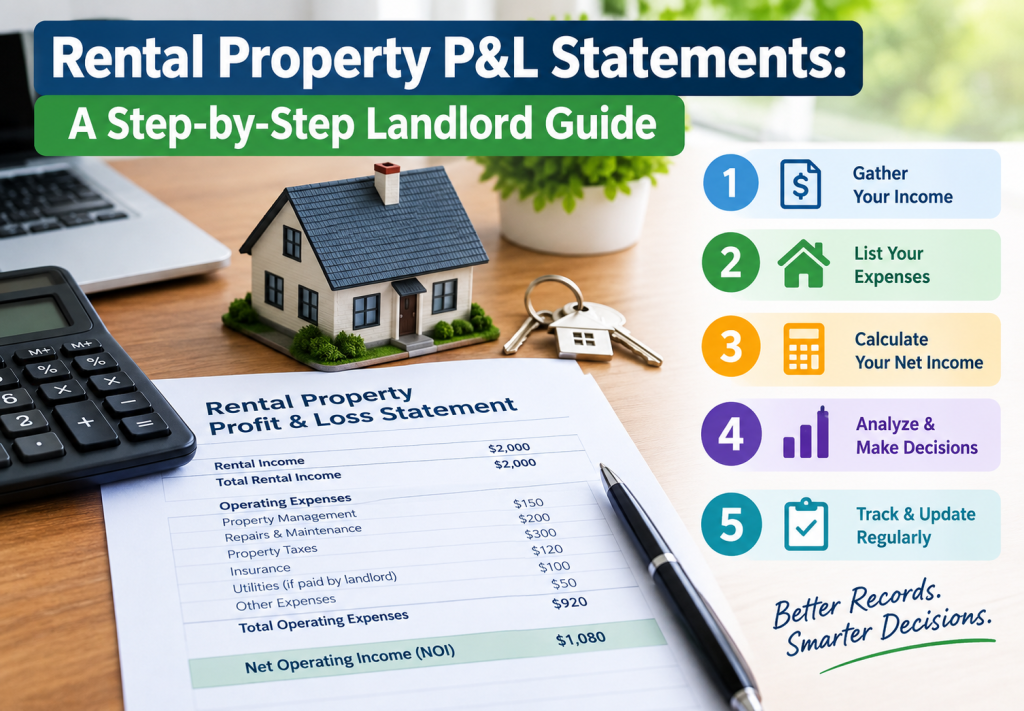
A profit and loss statement turns a rental property into numbers you can act on. It shows what came in, what went out and what was left, month by month. Lenders ask for one, accountants expect one, and it is the fastest way to see whether a property actually earns its keep.
This guide walks through building a rental property P&L from scratch, line by line, and shows how to read it once it is done.
What a Rental P&L Actually Shows
A P&L covers a set period, usually a month, a quarter or a year. It records income earned and expenses incurred in that period, then reports the profit.
It is not the same as your bank statement. A P&L counts rent due in the period even if it arrives late, and it spreads certain costs across years rather than recording them in one hit. Cash flow answers whether you can pay this month. The P&L answers whether the property makes money.
Step 1: List Every Source of Income
Start at the top with everything the property brings in.
- Base rent collected for the period
- Late fees and any lease break payments
- Pet rent, parking, storage or laundry income
- Utility or service charges rebilled to tenants
- Retained deposit amounts once they are forfeited
Record gross rent, then show vacancy and uncollected rent as separate deductions. Netting them off quietly hides the two problems that hurt returns most.
Step 2: Record Operating Expenses
Operating expenses are the costs of running the property this year. Group them so patterns stay visible.
Fixed Costs
Property taxes, building insurance, licence fees and any homeowner association or service charge. These change little month to month, so budgeting them is straightforward.
Variable Costs
Repairs, maintenance visits, grounds care, cleaning between tenancies, pest control and utilities paid by the owner. Planned maintenance belongs here too, and it is usually cheaper than the emergency repairs it prevents. Our guide on keeping property care active all year explains how scheduled visits smooth this line.
Management and Professional Fees
Letting agent commission, management fees, tenant finding costs, legal advice, accountancy and bookkeeping software.
Financing Costs
Mortgage interest sits in the P&L. The capital repayment part does not, because it reduces debt rather than expense. Split your mortgage payment before entering it.
Step 3: Add Depreciation
Depreciation spreads the cost of the building, not the land, across its useful life. It reduces taxable profit without touching your bank balance, which is why paper profit and cash in hand often differ.
US landlords should read the IRS rules in Publication 527 on residential rental property before setting a schedule. Rules elsewhere differ, so check locally.
Step 4: Calculate the Key Lines
Three figures do most of the work.
- Effective gross income. Gross rent plus other income, minus vacancy and bad debt.
- Net operating income. Effective gross income minus operating expenses, before mortgage interest and depreciation. This is the number lenders and buyers compare.
- Net profit. Net operating income minus interest and depreciation.
A property can post a healthy net operating income and still show a small net profit once financing and depreciation land. That is normal, and it is exactly why both lines belong on the statement.
Step 5: Review the Statement
Numbers only help if you read them. Each quarter, check four things.
- Expense ratio. Operating expenses as a share of effective gross income. Watch the trend rather than one month.
- Vacancy loss. Rising vacancy usually signals pricing, condition or management problems.
- Repairs creep. Repeated small repairs on the same system often point to a replacement you should plan for.
- Rent against market. Compare your rent with current local listings at each renewal.
Common Mistakes to Avoid
- Recording the full mortgage payment as an expense
- Treating a new roof or kitchen as a repair instead of a capital improvement
- Mixing personal and property transactions in one account
- Forgetting to set aside for future capital expenditure
- Reviewing the numbers only at tax time
Keeping It Simple
A spreadsheet with one tab per property and a monthly column is enough for a small portfolio. Keep a separate bank account for rental income, save receipts as you go, and reconcile monthly. Ten minutes a month beats a weekend of reconstruction in January.
This article is general information, not tax or accounting advice. Speak to a qualified accountant about your own circumstances.